38%
of Total Store Revenue From Email
eCommerce email outreach built for US brands that measure email in revenue, not open rates — connecting the right message to the right customer at the right moment across every stage of the lifecycle.
 Strategy delivered in 14 daysNo long-term contract requiredBuilt around your store, not a template
Trusted Platforms. Proven Performance.

















Results from a UniBright eCommerce email outreach client — placeholder metrics.
of Total Store Revenue From Email
Return on Email Marketing Spend
Higher Repeat Purchase Rate
of Abandoned Carts Recovered

Most stores capture an email address, then go quiet for weeks. By the time a promotion lands, the subscriber has forgotten you — so it gets ignored, flagged as spam, or unsubscribed. The hard part of email marketing isn't collecting the address; it's the follow-up that turns it into a returning customer.

Roughly seven in ten shoppers add to cart and leave without buying. Without a timely abandoned cart recovery sequence, that intent evaporates — the traffic was paid for, the interest was real, but with no reminder email the sale simply disappears.

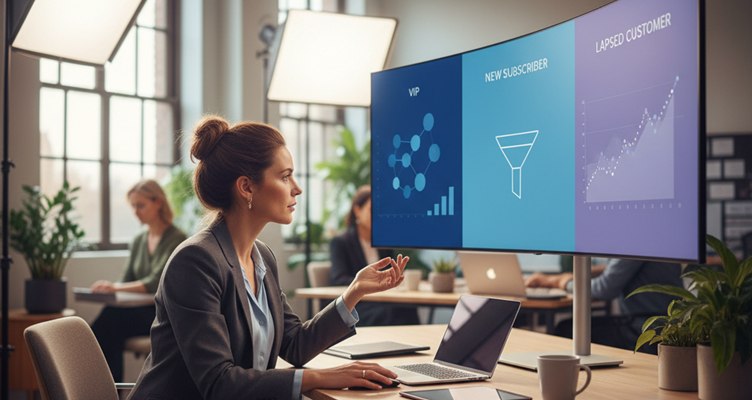
A first-time browser, a loyal VIP, and a lapsed customer are three different people — yet most stores send them the same campaign. Without segmentation, your best customers get generic offers and new subscribers get pushed too hard. Relevance drives conversions, and one-size-fits-all email kills it.

You can write the perfect campaign and still lose the sale if it never reaches to the inbox. Problems like poor list hygiene, no authentication, and sending emails to unengaged subscribers these things push emails into spam. Many brands don't realize how much revenue is going in junk folders, but the dashboard always says
'sent.'

Acquiring a customer is expensive; keeping them is where the margin lives. Without post-purchase flows, win back campaigns, and a retention plan, a first order becomes the only order — and you're stuck buying new buyers instead of turning existing ones into repeat revenue.
As a full-service eCommerce email marketing agency in the USA, UniBright builds your lifecycle strategy, writes every campaign, sets up automation and segmentation, protects deliverability, and reports on performance as one connected system - serving DTC and B2B eCommerce brands alike, with email measured in revenue and retention, not open rates.
 01
A full review of your store, products, margins, customer journey, and existing flows before anything is built, so every email maps to a real moment in the buyer's lifecycle.
 02
Automated welcome series that introduce your brand, set expectations, and convert new subscribers into first-time buyers while your store is top of mind.
 03
Timely, personalized sequences that recover carts and re-engage browsers, turning intent that would otherwise disappear into completed orders.
 04
Order confirmations, shipping updates, review requests, replenishment reminders, and cross-sell emails that increase repeat purchases and customer lifetime value.
 05
Targeted flows that revive lapsed customers and inactive subscribers before they churn - recovering revenue from a list you already own.
 06
Product launches, seasonal promotions, and on-brand newsletters that drive sales without exhausting your list or hurting deliverability.
 07
Behavioral and purchase-based segments so VIPs, new subscribers, and lapsed buyers each receive messaging built for them - not the same blast.
 08
Conversion copywriting and continuous testing of subject lines, offers, and layouts, so every flow and campaign keeps improving on real data.
 09
Authentication, list hygiene, and clean integration with your store and CRM so your emails reach the inbox and every send is tracked accurately.
 10
Using AI for segmentation, product recommendations, send-time optimization, and copy variations - with every strategy and offer reviewed and approved by a human strategist.
 11
Revenue-per-email, flow performance, and list growth reported clearly, so you can see exactly what each flow and campaign contributes to the bottom line.
FREQUENTLY ASKED QUESTIONS
eCommerce email outreach is sending targeted, timely emails to subscribers and customers to drive sales, retention, and repeat purchases. It combines automated flows — welcome, abandoned cart, post-purchase, win-back — with promotional campaigns and newsletters tied to each subscriber's behavior. Done well, it's one of the highest-ROI channels a store owns, because you already have permission to reach the customer.
Email automation is the use of pre-built, behavior-triggered sequences that send themselves when a customer acts — no manual work required. A welcome flow fires on subscribe, an abandoned cart email on exit, a post purchase series once an order is placed. Running around the clock, these automated flows recover revenue and nurture customers, and for most brands they quietly generate a large share of total email revenue.
You can recover abandoned shopping carts with a simple, timed email sequence. This sequence reminds shoppers about what they left behind and addresses their concerns. A good abandoned cart recovery plan includes three emails: a reminder sent within an hour, a follow-up that discusses shipping or returns, and a final email that creates a sense of urgency. You should also add a browse abandonment flow for people who looked at products but didn’t add anything to their cart.
Cold email outreach is emailing prospects who haven't yet engaged with your brand, to open a conversation or drive a first purchase. In B2B eCommerce it's used for partnerships, wholesale, and lead generation, while DTC brands rely more on opt-in lifecycle email. Cold email works best with tight targeting, personalization, and clean deliverability — and unlike marketing to your own list, it must follow CAN-SPAM and consent rules carefully.
To increase email open rates, focus on these key steps: ensure your emails reach the inbox, provide relevant content, and create strong subject lines. Start by authenticating your domain and keeping your email list clean. Avoid triggers that could send your emails to spam. Then, segment your new subscribers and loyal customers to send them different messages. Make sure to refine your subject lines and preview text. Because privacy changes have made open rates less reliable, also pay attention to click rates and revenue per email.
Lifecycle email marketing maps emails to each stage of the customer journey — from new subscriber to repeat buyer. A welcome series greets subscribers, a recovery sequence chases abandoned carts, post purchase flows nurture first-time buyers, and win-back campaigns revive lapsed ones. Because it meets
people at the right moment, it's the engine behind customer retention and higher customer lifetime value, turning one purchase into a habit.
For most eCommerce brands, Klaviyo is the strongest choice — built for online stores and integrated with Shopify, WooCommerce, and BigCommerce for deep segmentation and revenue attribution. Shopify Email suits native simplicity, Omnisend combines email and SMS, ActiveCampaign handles complex logic, and HubSpot fits B2B eCommerce. Match the platform to your catalog, budget, and flow needs, then set up clean tracking from the first send.
Yes — Shopify and WooCommerce stores see fast results because they integrate cleanly with platforms like Klaviyo and Omnisend that make flows and attribution painless. Products, carts, and orders sync automatically,
so welcome, abandoned cart, and post-purchase flows fire on real behavior from day one. Results hinge on strategy — segmentation, timing, copy, deliverability — not the platform. The key is clean tracking so every email's revenue is measurable.
Promotional emails are one-time campaigns sent on a schedule to a list of people. On the other hand, automation flows are triggered by customer actions and send messages automatically. A promotion announces a launch or sale to many people at once, while a flow sends messages like a welcome, a cart
reminder, or a request for a review on its own. Healthy email programs use both types. Start by creating automated messages, then add promotions with careful targeting.
AI improves email marketing by handling data-heavy work fast — building segments from behavior, predicting best send times, recommending products individually, and testing copy at scale. Predictive models can flag subscribers about to churn so a win-back flow reaches them in time. The workable balance lets AI move fast on segmentation and personalization while a human owns strategy, brand voice, and the revenue decisions that drive profit.
AI email marketing is the use of artificial intelligence to automate and personalize email at scale — powering AI customer segmentation, product recommendations, send-time optimization, and subject-line testing.
Instead of guessing, AI analyzes each subscriber's behavior to decide who gets what, and when. For eCommerce brands it sharpens lifecycle flows and retention, but the strategy, brand voice, and offers still need
a human, so AI email automation works best as a co-pilot, not autopilot.
eCommerce email outreach services are usually priced as a monthly management fee based on how many flows and campaigns you need, your list size, and the strategy and copy involved. Building core flows plus a few campaigns is a different scope than a full lifecycle program with heavy segmentation and A/B testing. We build a proposal after a free audit — and the number worth watching is incremental revenue and ROI after
fees, not the lowest price.
Choose an eCommerce email marketing agency by how it measures success — revenue per email, flow performance, repeat purchase rate, and customer lifetime value, not open rates alone. Ask about lifecycle strategy, Klaviyo expertise, segmentation, deliverability, and CRM integration, and expect transparent reporting you own. Be wary of guaranteed results or long contracts pushed before value is proven; a free upfront audit is a strong signal.